Accessible Me

Accessible Me

Accessible Me seeks to transform not just businesses, but the entire architecture of accessibility.

accessibleme.solutions/

What they are building

I spoke with founder Michael Osborne about what Accessible Me does. He explained that they focus on whether a real person can use an accessible interface in real world conditions; when tired, overwhelmed, under pressure or processing the world differently. This has led them increasingly into work in cognitive load, neurodivergence, and trauma-informed design. More than just audits and training, they want to build consideration for the diversity of human function into the fabric of client businesses so more people can participate without having to ask for accommodation.

What caught our attention

First, they are moving accessibility from an accommodation to a design consideration. We build everything around assumptions of most common use case, height, width, size of hand, speed of turn (roadways). This means some people receive preferential treatment, while others are excluded. But this is the reductionist, mechanistic mindset. It treats humans as cogs in a machine rather than participants in a living system. But from an ecological perspective, it is those differences that make the system capable of withstanding change. The more diverse the interactions, the most stable the system becomes. Accessible Me recognizes the dignity and beauty in the differences amongst us. You don’t have to be disabled to appreciate that! Secondly, they offer an experience of inaccessibility in an Escape Room style activity called A11yship. This proves to me they aren’t just out to win contracts and exploit a market niche. They are making cultural change.

Riss connection

Michael and I discussed the emergence of a culture of perception and how that might be showing up in our various circles. He was intrigued by the idea of a people defined by their way of seeing and operating in the world. We talked of shared signals and the ways it may vary from community to community. Not in a directed and controlled approach, but organically through convergence of people who share the experience of being outliers in the dominant systems.

Empowered Workplace Architect

Lenka Kneschke: The Empowered Workplace Architect

Lenka Kneschke is one of the most Scarrae people I have ever met. Her business focuses entirely on making workplaces better for all types of perception.

www.linkedin.com/in/lenkakneschke

What they are building

Lenka’s dream is to foster inclusive and resilient workplaces by employing her perceptual skills to identify and enhance workplaces that let workers thrive. This not only helps the employee, it helps the employer by giving greater access to the unique skillsets their employees bring. If you need help in your workplace, she is a certified peer coach. And if you are in a leadership position, like I was, she can come in, assess your situation, and build custom solutions that will be productivity focused and data driven. While embedding care and awareness of all the wonderous differences the dominant culture keeps trying to force into the same mold.

What caught our attention

I met Lenka at a conference on behavioral psychology in the conservation field. We both spoke, but as soon as I saw her, I could tell she was probably Scarrae. Her ear loops were the first clue, but her motion was another. I found her on a break and tried several times before finally butting right into her conversation. She looked at me, and we both smiled at seeing each other see the other. We talked, decided to meet, and hit it off. Collaborations were born and she helped my ‘dayjob’ immensely. But soon, she read my books entered my world, and we’ve been at it ever since.

Riss connection

Lenka “gang ben riss, yan”. She knows the gaps people fall in, has been in them herself, and now turns that knowledge to helping others. You can’t get more Scarrae than that! In addition to her work, she is a Sensorate Reviewer, book tester, and dear friend. When we talked about culture, she recognized it immediately, and I knew it was real when she texted me from another conference saying, “I just met another Scarrae, yeh gots talk!”
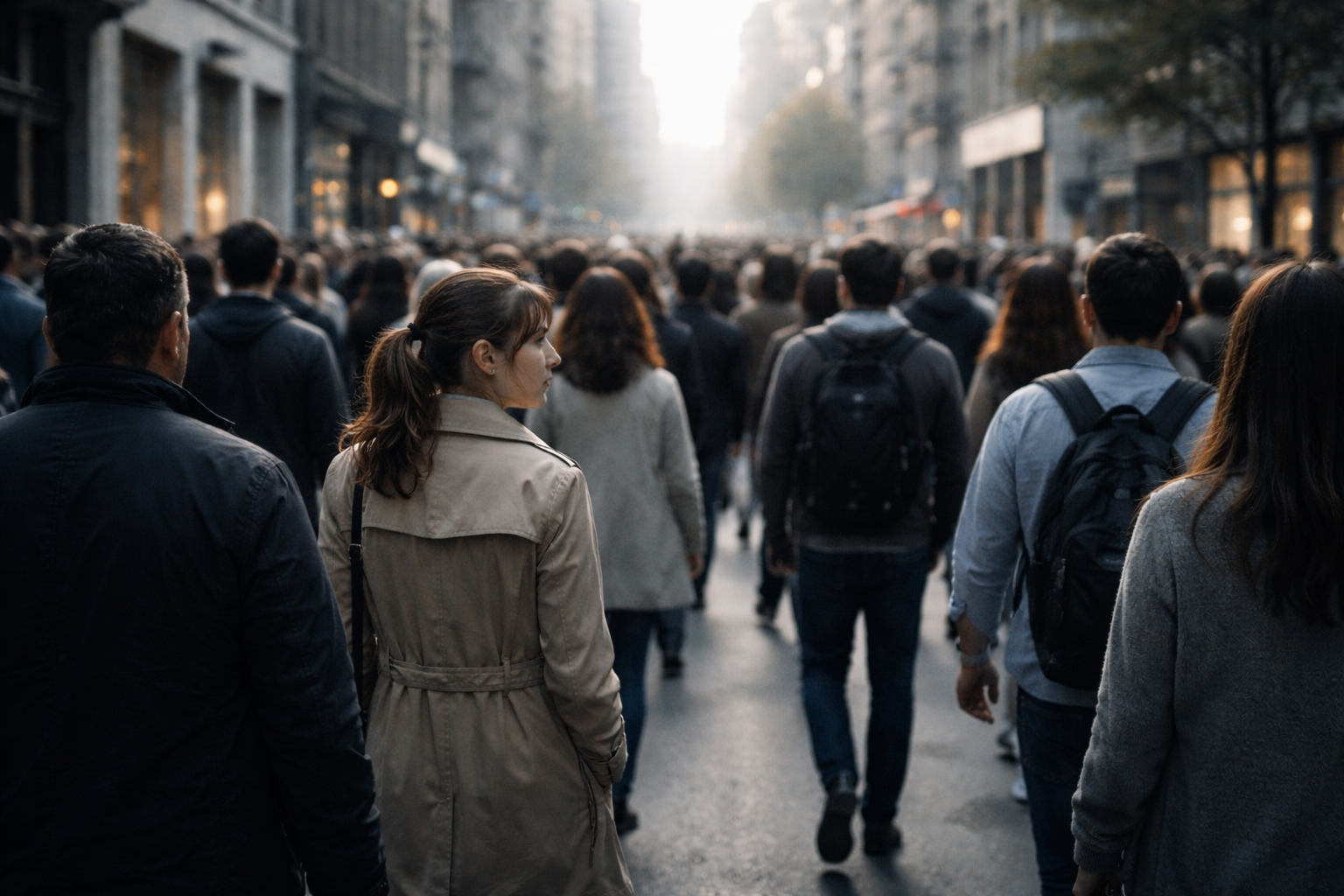
What is Scarrae

What is Scarrae?

Scarrae is our word for people who navigate the world in a perceptive, sensory-aware, layered way.

What they are building

Scarrae is a word from the language known as Scots. It refers to reflected moonlight. That’s a perfect vibe for how we use it. In our use, it refers to a type of perception and the people who operate by it. We can’t list all the ways it might express. We’re still figuring that out, and, like all living systems, it’s evolving. All we’ve done is apply a word. It isn’t the only word. But it seems to fill a need. Once you get a sense for it, we think you’ll agree, it kinda fits.

What caught our attention

The word was first used in the books of our very own Jonah Mick (That’s me, by the way.) My writing is all about perception and using stories to map aspects of reality that are hard to describe directly. Scarrae fits exactly that. Not moonlight, not reflection, the reflection of the moonlight; barely detectable unless you’re paying attention, but undeniable once you see it. In the research for my books, I kept encountering people who seemed to naturally embody these traits across cultures, geographies, lifestyles. And I wondered… maybe this is something real. As that developed, I explored, what if those scattered and marginalized few were to stop telling themselves the story their Mother Culture was whispering, and like the Roma, say, “We are our own people! We are amongst you, but not the same.” Then I encountered people saying the same thing: neurodivergent manifestos, values-based ethics, circular economies, and shadow systems growing right amidst the decaying elements of our calcified culture. I just gave them a name.

Riss connection

My books are a speculative journey through how this people may actually develop. As with any multicultural people, their languages would blend. So I looked to existing slangs, pidgins, creoles and discovered once again, more than a few of these exist amongst intercultural groups. While not all rise to the level of a full creole, they certainly become a linguistic register that signals in-group, supplies the ‘codec’ if you will, for how the words should be taken. I actually live in one between Japan and the US. I discovered another between Scots and Appalachia. These became the foundation for the fictional Scarrae language. But then a bizarre thing started happening. People in my circles, beta readers, friends, began to adopt Scarrae words where they fit better than their native words. And in that numinous interplay between art and life, Scarrae as an IRL register emerged. It is still evolving. I don’t own it. Words and patterns are added, change on their own. And weirdest of all, similar concepts show up across unrelated cultures. All the more evidence that Gang ben riss, ken furja: You have to go into the gaps to perceive the opportunities.